



Many diesel truck owners are highly familiar with the bright blue filler cap situated right next to their primary fuel inlet, yet the precise mechanical contribution of the fluid that goes inside often remains misunderstood. Diesel Exhaust Fluid, widely known as DEF, is a non-hazardous, non-flammable, clear liquid designed to reduce tailpipe emissions. It is crucial to understand that this fluid is never mixed with diesel fuel, nor does it ever enter the combustion chamber. Instead, it operates exclusively within the exhaust aftertreatment assembly to treat emissions before they exit the tailpipe. The primary function of this fluid is to break down nitrogen oxides, which are environmental pollutants generated during high-temperature combustion cycles. While your truck is running, exhaust gases flow directly into the Selective Catalytic Reduction system. Here, a computer-controlled dosing valve sprays a precise mist of the fluid into the hot exhaust stream. The extreme heat immediately converts the fluid into ammonia, which reacts chemically with the nitrogen oxides inside the catalyst. This chemical reaction transforms up to 90% of those tailpipe pollutants into harmless nitrogen gas and water vapor, allowing heavy-duty pickups to meet stringent environmental standards without compromising horsepower. Because the emissions system is legally required for highway operation, your truck continuously monitors the fluid level. Disregarding low-fluid warnings will eventually trigger a reduced-power safety mode, limiting your engine speed to ensure environmental compliance. For local drivers navigating the demanding high-altitude terrain near Flaming Gorge, keeping this system healthy is essential. Our team represents the local spirit because we are Wyoming, and we support every vehicle with our comprehensive Fremont Care program. If you need assistance diagnosing a dashboard warning light, you can reach our service department by giving us (307) 228-2091 or visiting our Rock Springs dealership location for professional diagnostic support. The Science of ISO 22241 and the Crucial 32.5 Percent Urea Ratio To understand why modern diesel powerplants run so cleanly, one must look at the strict chemical specifications governing their operating fluids. Every container of certified diesel exhaust fluid must display the ISO 22241 designation. This international standard guarantees that the mixture contains exactly 32.5% high-purity, automotive-grade urea and 67.5% deionized water. Unlike agricultural fertilizers, this highly refined compound is manufactured to eliminate trace metals, aldehydes, and other microscopic contaminants that would permanently poison the delicate catalytic coatings inside your selective catalytic reduction system. The specific 32.5% urea concentration represents a critical chemical sweet spot known as the eutectic point. At this exact ratio, the liquid achieves its lowest possible freeze point. More importantly, both the urea and the water freeze and thaw at the exact same rate. This uniform phase change prevents the solution from separating, stratifying, or becoming over-concentrated as it transitions between liquid and solid states. If the ratio drifts even slightly, the fluid can crystallize unevenly, leading to clogged injector nozzles and damaged dosing pumps. Using non-certified fluids or attempting to dilute the mixture with tap water introduces minerals that quickly degrade the exhaust sensors. Over time, these mineral deposits build up inside the catalyst, eventually requiring an expensive replacement of the entire aftertreatment assembly. When shopping for reliable pre-owned diesel trucks and used cars, verifying that the previous owner used only certified fluids is a great way to ensure the long-term health of the emissions hardware. Keeping the chemical balance precise is the single best way to protect your exhaust system from premature failure and maintain peak engine performance during heavy-duty operations. Real World Consumption Rates for Heavy Duty Pickups Under Load How much fluid does a hard-working diesel truck actually consume during daily operations? For a standard light-duty or heavy-duty pickup, the consumption rate typically tracks at about 2% to 3% of your total diesel fuel usage. This means that for every 100 gallons of diesel fuel your engine burns, the emissions system will inject approximately 2 to 3 gallons of exhaust fluid. Because consumption is tied directly to fuel burn, your driving habits and workload play a major role in how often you need to refill. Heavy towing, hauling large payloads, and climbing steep mountain passes increase engine load and exhaust temperatures, which in turn causes the computer to inject more fluid to neutralize the rising emissions. Under normal empty-bed driving conditions, a full 5-gallon tank will typically last between 3,000 and 10,000 miles. Drivers navigating the rugged terrain around Flaming Gorge understand how quickly towing a heavy trailer can change these numbers. When your engine works harder, the selective catalytic reduction system increases the injection rate to keep up with elevated nitrogen oxide levels. If you are preparing for a demanding haul or looking to upgrade to a more capable model, exploring our selection of new vehicles can help you find a vehicle equipped with the latest, most efficient emissions technology. To help visualize this relationship, consider the following estimates based on average fuel economy and driving conditions: Driving Scenario Average Fuel Economy Fuel Used per 1,000 Miles Estimated Fluid Consumed Heavy Towing / Hauling 15 mpg 67 gallons 1.3 to 2.0 gallons Mixed Commuting 20 mpg 50 gallons 1.0 to 1.5 gallons Highway Cruising 25 mpg 40 gallons 0.8 to 1.2 gallons Understanding these consumption rates ensures you are never caught off guard by a low-fluid warning when working far from home. Keeping a fresh jug of certified fluid on hand is a simple way to maintain uninterrupted performance. How Freezing Temperatures Affect Your Fluid Tank and Exhaust System Harsh high-altitude winters present a unique challenge for modern diesel exhaust systems. Because the solution consists primarily of deionized water, it begins to crystallize and freeze solid once the temperature drops to 12°F (-11°C). While this physical change might sound alarming to truck owners preparing for sub-zero weather, diesel engineers designed the aftertreatment system to handle extreme cold without any loss of vehicle performance. When the liquid transitions to a solid state, it expands by approximately 7% of its volume. To prevent this expansion from cracking the storage reservoir or damaging sensitive lines, the onboard tank is engineered with specific expansion chambers and empty headspace. Furthermore, modern diesel trucks feature integrated heating elements inside the reservoir and along the delivery lines. When you start your vehicle in freezing conditions, the engine runs normally without injecting the fluid initially. The onboard computer monitors the process while the heating elements rapidly liquefy the frozen mixture, allowing emission control operations to resume seamlessly once the proper temperature is achieved. Adding aftermarket anti-gelling agents, alcohol, or other additives to prevent freezing is a critical mistake. These substances will instantly ruin the chemical balance of the solution, contaminate the catalytic converter, and trigger immediate dashboard fault codes. If you suspect your heating elements are malfunctioning or want to ensure your aftertreatment system is fully prepared for a brutal winter, you can easily schedule service online to have our technicians inspect the components. Our commitment to the local community means we protect your vehicle with the signature Fremont Care program, ensuring your diesel truck remains reliable throughout the coldest months of the year. Why Spilling This Fluid Into Your Fuel Tank Causes Catastrophic Damage While diesel exhaust fluid is completely safe to handle and poses no environmental threat, its chemical properties make it highly destructive when introduced to the wrong parts of your vehicle. The solution is highly corrosive to metals like copper, brass, aluminum, and mild steel. Because of this, it must remain strictly isolated within its dedicated storage tank. If you accidentally pour this fluid into your diesel fuel tank, the consequences are immediate and severe. The mixture will not burn in the combustion chamber. Instead, the water and urea solution travels directly into the high-pressure fuel pump and the precision fuel injectors. Because this fluid lacks the natural lubricating properties of diesel fuel, the metal-on-metal contact inside the high-pressure pump will cause it to seize almost instantly. As the water content evaporates under the extreme pressures of the fuel system, the urea rapidly crystallizes. This crystallization leaves behind hard, abrasive deposits that clog fuel injector nozzles, score cylinder walls, and contaminate the entire fuel delivery network. If you realize that this fluid has entered your fuel system, do not turn on the ignition or start the engine. Even turning the key to the accessory position can prime the fuel pump, sending the corrosive mixture throughout the entire system. Your truck must be towed directly to a professional facility to have the fuel system completely drained and flushed. At Fremont Motor Rock Springs Chrysler Dodge Jeep Ram Fiat, we know that mistakes happen when you are busy working hard. Our deep roots in the state reflect our belief that "We Are Wyoming," meaning we stand by our neighbors with honest service and dependable support. If you find yourself facing an accidental system contamination, our experienced technicians can help minimize the damage. Additionally, if you are looking to upgrade your current work truck, you can easily value your trade-in online to begin the process of transitioning into a newer model. Common Questions About Maintaining Your Emissions Aftertreatment System What are the primary warning signs of a failing exhaust fluid system? The most common indicator of an impending issue is an active dashboard warning light, which is often accompanied by a message indicating a fluid quality issue or a system fault. You might also notice a strong, pungent ammonia smell coming from the tailpipe. This odor typically points to an over-dosing injector or a degraded catalyst that is failing to properly convert the sprayed fluid. If you notice these symptoms or need help getting your vehicle ready for a purchase, you can complete our online credit application to explore your options for a newer, worry-free model. Can I store spare jugs of fluid in my garage long-term? Yes, but shelf life is highly dependent on storage temperatures. When stored in a sealed container in a cool, dry area between 50°F and 75°F, the fluid remains stable for up to two years. However, exposure to direct sunlight or temperatures consistently exceeding 95°F will accelerate the breakdown of the urea, cutting the shelf life down to six months or less. This is particularly important for drivers in Salt Lake City where summer garage temperatures can climb quickly and degrade stored supplies. How can I tell if the fluid I purchased has degraded or expired? Fresh, high-quality fluid should be completely clear and look identical to water. If the fluid appears cloudy, yellowish, or has visible white crystals floating in the container or crusting around the cap, it has degraded or become contaminated. You should safely discard this fluid rather than pouring it into your vehicle. Using compromised fluid can trigger immediate emissions system fault codes that require professional servicing to clear. What does the diagnostic trouble code P207F indicate? This code indicates "Reductant Quality Performance — Out of Range," meaning the onboard sensors have detected that the urea concentration in the tank is outside the acceptable 31.8% to 33.2% window. This is usually caused by expired fluid, water dilution, or a malfunctioning quality sensor inside the storage tank. At Fremont Motor Rock Springs Chrysler Dodge Jeep Ram Fiat, we live by the motto "We Are Wyoming" by providing honest, dependable support for our local truck owners. Our signature Fremont Care program offers peace of mind with exceptional maintenance coverage. If you are experiencing active dashboard warnings, please contact our service advisors at (307) 228-2091 for immediate assistance, or get directions to stop by our Rock Springs service center to speak with a diesel specialist in person. © 2026 Fremont Motor Rock Springs Chrysler Dodge Jeep Ram Fiat. All rights reserved.
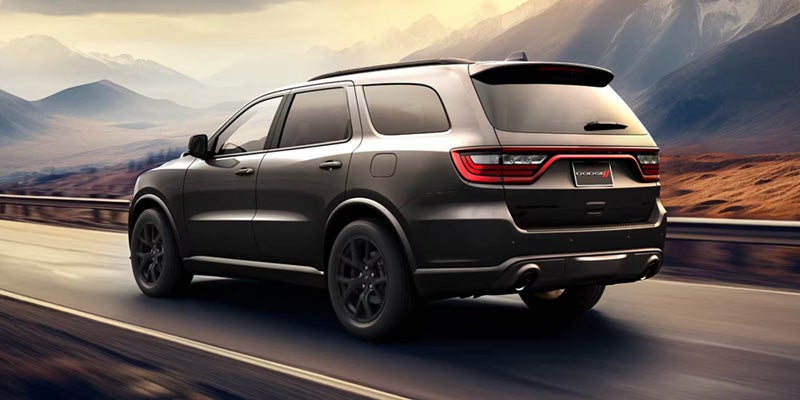
Is the 2026 Chrysler Pacifica Better Than the Dodge Durango?
The 2026 Chrysler Pacifica AWD is better for maximum interior passenger space, flexible cargo folding, and everyday family ride comfort, while the Dodge Durango is better if your household requires heavy towing capacity up to 8,700 lbs or performance V8 engine options. Neither vehicle is universally superior because each serves a distinct family role: the Chrysler Pacifica functions as an ultra-versatile passenger mover with about 141 cubic feet of maximum cargo capacity, whereas the Dodge Durango operates as a truck-based muscular SUV engineered for hauling heavy trailers and navigating rugged terrain. Choosing between these two models comes down to what daily utility means for your household. The 2026 Chrysler Pacifica AWD is powered by a 3.6L Pentastar V6 engine producing 287 hp and 262 lb-ft of torque mated to a 9-speed automatic transmission. For families navigating the semi-arid high desert basin around Rock Springs, where sudden winter storms and icy road conditions occur frequently, the available all-wheel drive system on the Select, Limited, and Pinnacle trims engages automatically when front-wheel slip is detected, low ambient temperatures are measured, or wipers are activated, without requiring driver intervention. 2026 Dodge Durango interior. On the other hand, the Dodge Durango provides three rows of seating for up to seven passengers with available all-wheel drive, higher ground clearance, and an available V8 powertrain designed for heavier tasks. While both vehicles deliver complete family functionality, the minivan prioritizes low step-in height, power sliding side doors, and passenger legroom across all three rows. If you want to compare both family haulers side by side in person, you can easily find our showroom on Foothill Blvd or give our team (307) 228-2091 for immediate assistance. What Are the Practical Seating and Cargo Differences Between Pacifica AWD and Durango? With up to eight-passenger seating and approximately 141 cubic feet of cargo space, the 2026 Chrysler Pacifica AWD surpasses the Dodge Durango's seven seats and 85 cubic feet of cargo volume. Behind the third row alone, the Chrysler Pacifica retains about 32 cubic feet of deep luggage storage, whereas the Dodge Durango provides roughly 17 cubic feet. 2026 Chrysler Pacifica. Cabin space directly dictates passenger comfort on longer road trips. The 2026 Chrysler Pacifica AWD boasts 165 cubic feet of total passenger volume, giving third-row occupants 36.5 inches of legroom. In contrast, the Dodge Durango offers 141 cubic feet of passenger volume with third-row legroom measuring 30.3 inches. That six-inch gap in the rearmost bench allows teenagers and adults to ride comfortably in the van without feeling cramped, whereas the third row in the SUV is best suited for younger children. 2026 Chrysler Pacifica interior. Cargo loading flexibility represents another massive structural contrast between these two vehicles: Chrysler Pacifica Stow 'n Go Seating: On gas-powered Select and Limited trims, second- and third-row seats fold completely flat into dedicated floor tubs in seconds, eliminating the need to physically remove heavy seats from the cabin. (Note: The luxury Pinnacle trim replaces second-row Stow 'n Go with non-stowing, ultra-plush captain's chairs). Dodge Durango Split-Folding Seats: Second-row captain's chairs or bench seating fold forward, while the 50/50 split third row folds flat onto the cargo floor, creating a flat deck but elevated floor height. Power Sliding Doors vs. Swinging SUV Doors: The Chrysler Pacifica features hands-free power sliding side doors that allow children to enter and exit in tight parking lots without bumping adjacent cars, while the Dodge Durango uses traditional wide-swinging rear doors. When families visit our lot to compare a minivan with a three-row crossover, they usually test the second-row seat fold mechanism and third-row legroom before even looking under the hood. If your daily routine involves hauling sports equipment, camping gear, or groceries alongside a full family, exploring our inventory of pre-owned family vehicles can help you see how these different seating layouts hold up over time. Engine & Performance Powertrain specs by trim Feature Limited Limited AWD Pinnacle Pinnacle AWD Select Select AWD Engine 3.6L 3.6L 3.6L 3.6L 3.6L 3.6L Horsepower 287 hp 287 hp 287 hp 287 hp 287 hp 287 hp Torque 262 lb-ft 262 lb-ft 262 lb-ft 262 lb-ft 262 lb-ft 262 lb-ft Transmission automatic 9-speed automatic 9-speed automatic 9-speed automatic 9-speed automatic 9-speed automatic 9-speed Drivetrain Front-wheel drive All-wheel drive Front-wheel drive All-wheel drive Front-wheel drive All-wheel drive Dimensions & Capacity Capacity and dimensions by trim Feature Limited Limited AWD Pinnacle Pinnacle AWD Select Select AWD Seating 7 7 7 7 7 7 Cargo 32.3 cu ft 32.3 cu ft 32.3 cu ft 32.3 cu ft 32.3 cu ft 32.3 cu ft Curb weight 4,330 lbs 4,883 lbs 4,883 lbs 4,883 lbs 4,330 lbs 4,883 lbs Towing 3,600 lbs 3,600 lbs 3,600 lbs 3,600 lbs 3,600 lbs 3,600 lbs Payload 1,725 lbs 1,417 lbs 1,417 lbs 1,417 lbs 1,725 lbs 1,417 lbs How Much Can the Dodge Durango Tow Compared to the Chrysler Pacifica AWD? The Dodge Durango dramatically outperforms the Chrysler Pacifica AWD in maximum towing capability, pulling up to 8,700 lbs on properly equipped V8 models compared to the minivan's maximum rating of 3,600 lbs. For households that pull heavy double-axle camper trailers, horse trailers, or large cabin cruisers, the Dodge Durango is the clear choice. The 2026 Chrysler Pacifica AWD achieves its 3,600 lbs towing limit when equipped with the factory Trailer Tow Group, which adds a Class II hitch receiver, four-pin and seven-pin wiring harness, and heavy-duty engine cooling. That capacity is sufficient for pulling a pair of personal watercraft, a lightweight single-axle utility trailer, or a small pop-up tent camper. By comparison, the Dodge Durango offers multiple towing thresholds based on engine configuration: 3.6L Pentastar V6: Tows up to 6,200 lbs when properly equipped. 5.7L HEMI V8: Tows up to 7,400 lbs with integrated trailer brake control. 6.4L HEMI V8 / Supercharged 6.2L V8: Reaches the peak towing capacity of 8,700 lbs. For mountain driving around Pinedale, where high elevation demands steady engine cooling and robust transmission hardware, towing heavy loads requires consistent mechanical maintenance. Keeping your powertrain components, differential fluids, and trailer wiring in peak condition is essential for safe hauling, and you can easily schedule a maintenance check with our factory-trained technicians to keep your vehicle travel-ready. What Is the Driving Range on a Single Tank of Gas for Both Vehicles? The Dodge Durango offers a longer total highway driving range on a single tank of fuel due to its larger 24.6-gallon fuel tank, achieving over 600 miles of highway range with its V6 engine compared to roughly 475 miles for the Chrysler Pacifica AWD. The 2026 Chrysler Pacifica AWD uses a 19-gallon fuel tank and achieves an EPA-estimated 20 mpg combined, delivering up to 19 mpg city and 28 mpg highway on front-wheel-drive configurations. Highway cruising range and fuel economy breakdown for both haulers: 2026 Chrysler Pacifica FWD: 19-gallon tank, rated at 19 mpg city / 28 mpg highway, yielding roughly 532 highway miles per tank. 2026 Chrysler Pacifica AWD: 19-gallon tank, rated at 17 mpg city / 25 mpg highway / 20 mpg combined, yielding roughly 475 highway miles per tank. Dodge Durango 3.6L V6 AWD: 24.6-gallon tank, rated at 18 mpg city / 25 mpg highway, yielding up to 615 highway miles per tank. Dodge Durango 5.7L V8 AWD: 24.6-gallon tank, rated at 14 mpg city / 22 mpg highway, yielding roughly 540 highway miles per tank. While the Chrysler Pacifica front-wheel-drive model achieves superior highway efficiency at 28 mpg highway, the Dodge Durango compensates for its lower fuel economy figures with a massive 24.6-gallon fuel reservoir. This extra tank volume allows SUV drivers to travel farther between fill-ups on long remote stretches of highway. To explore fuel-efficient options across our current lineup of new models, our sales team is standing by to help you compare real-world operating costs. You can also get a head start on your purchase planning by evaluating your trade-in online today. Fuel Economy Fuel economy and range by trim Feature Limited Limited AWD Pinnacle Pinnacle AWD Select Select AWD MPG 19 city / 28 hwy / 22 combined 17 city / 25 hwy / 20 combined 19 city / 28 hwy / 22 combined 17 city / 25 hwy / 20 combined 19 city / 28 hwy / 22 combined 17 city / 25 hwy / 20 combined What Common Mechanical Complaints Should Buyers Know About the Pacifica? Common mechanical and electrical issues reported on earlier Chrysler Pacifica model years include sliding door latch or sensor misalignments, secondary auxiliary battery drain affecting the engine stop-start system, and occasional software lag on earlier infotainment displays. Knowing these specific areas allows buyers to perform targeted inspections when evaluating new or pre-owned minivans. Essential inspection areas for Chrysler Pacifica buyers include: Power Sliding Door Hardware: Test automatic opening and closing operations from the key fob, pillar switches, and exterior handles to ensure sensors detect obstructions correctly and tracks move smoothly without binding. Dual 12-Volt Battery System: Models equipped with automatic engine stop-start utilize a primary starter battery and an auxiliary battery. Weak auxiliary batteries can cause false dashboard error warnings or disable stop-start functions. Transmission Shift Smoothness: The 9-speed automatic transmission should transition smoothly through low-speed gear changes without harsh engagement or hesitation during cold acceleration. Uconnect 5 Infotainment System: Verify that touchscreen responses, Bluetooth pairing, backup camera displays, and wireless Apple CarPlay or Android Auto connections load promptly. Staying proactive on routine maintenance prevents minor electrical glitches from developing into inconvenient service stops. When you are ready to move forward with purchasing a family hauler, filling out our secure online credit application streamlines the entire buying process before you visit our dealership. Common Family Hauler Questions Answered Q: Does the 2026 Chrysler Pacifica AWD retain second-row Stow 'n Go seating? Yes, for gas-powered Select and Limited trims, the 2026 Chrysler Pacifica AWD retains second-row Stow 'n Go seating functionality. Chrysler engineered the all-wheel-drive system with a power-transfer unit and rear drive module that disengages completely when extra traction is not needed, preserving the deep underfloor storage tubs. However, the range-topping Pinnacle trim equips plush, fixed second-row captain's chairs that do not fold into the floor. Q: What engine comes standard in the 2026 Chrysler Pacifica gas lineup? The 2026 Chrysler Pacifica comes standard with a 3.6L Pentastar V6 engine across all gas trims, including Select, Limited, and Pinnacle. This naturally aspirated engine generates 287 hp and 262 lb-ft of torque and is paired exclusively with a 9-speed automatic transmission in either front-wheel drive or available all-wheel drive. Q: Which vehicle is easier for loading young children in car seats? The Chrysler Pacifica is significantly easier for child car seat installation and loading due to its lower ride height and wide power sliding doors. Parents do not need to lift children upward into a tall cabin, and the sliding doors allow easy access even when parked closely alongside other vehicles in busy parking lots. Q: Is all-wheel drive standard on the Dodge Durango? All-wheel drive is widely available across the Dodge Durango trim lineup, though rear-wheel drive serves as the standard entry configuration on select trims. Choosing all-wheel drive enhances low-traction launch capability and towing stability in snow, rain, or unpaved driving conditions. Q: How does ground clearance compare between the Pacifica AWD and Durango? The Dodge Durango offers substantially higher ground clearance, averaging roughly 8 inches depending on tire and suspension trim, compared to approximately 5.4 inches for the Chrysler Pacifica AWD. This additional clearance allows the Dodge Durango to navigate unpaved trail roads, steep driveway transitions, and deep snow drifts with reduced risk of scraping the underbody. When Should You Plan to Order a Future Pacifica or Durango? You should start discussing upcoming model year orders for a Chrysler Pacifica or Dodge Durango roughly three to six months prior to the official order bank opening for that production year. While current 2026 model year inventory is readily available on dealership lots today, customers seeking custom factory order configurations, specialized paint choices, or specific option packages for future model releases benefit from establishing early contact with our sales specialists. Whether you prefer the unmatched passenger flexibility of the Chrysler Pacifica AWD or the heavy-duty muscle of the Dodge Durango, our team is ready to guide you through side-by-side test drives and flexible financing plans tailored to your household budget. Visit our Rock Springs location at 1900 Foothill Blvd, Rock Springs, WY 82901, or call us directly at (307) 228-2091 to schedule your visit today. © 2026 Fremont Motor Rock Springs Chrysler Dodge Jeep Ram Fiat. All rights reserved. Vehicle specification data © JATO Dynamics Limited.