

Blog / Fremont CDJR Rock Springs Service

Demystifying Diesel Exhaust Fluid and Its Role in Modern Truck Performance

Many diesel truck owners are highly familiar with the bright blue filler cap situated right next to their primary fuel inlet, yet the precise mechanical contribution of the fluid that goes inside often remains misunderstood. Diesel Exhaust Fluid, widely known as DEF, is a non-hazardous, non-flammable, clear liquid designed to reduce tailpipe emissions. It is crucial to understand that this fluid is never mixed with diesel fuel, nor does it ever enter the combustion chamber. Instead, it operates exclusively within the exhaust aftertreatment assembly to treat emissions before they exit the tailpipe.

The primary function of this fluid is to break down nitrogen oxides, which are environmental pollutants generated during high-temperature combustion cycles. While your truck is running, exhaust gases flow directly into the Selective Catalytic Reduction system. Here, a computer-controlled dosing valve sprays a precise mist of the fluid into the hot exhaust stream. The extreme heat immediately converts the fluid into ammonia, which reacts chemically with the nitrogen oxides inside the catalyst. This chemical reaction transforms up to 90% of those tailpipe pollutants into harmless nitrogen gas and water vapor, allowing heavy-duty pickups to meet stringent environmental standards without compromising horsepower.

Because the emissions system is legally required for highway operation, your truck continuously monitors the fluid level. Disregarding low-fluid warnings will eventually trigger a reduced-power safety mode, limiting your engine speed to ensure environmental compliance. For local drivers navigating the demanding high-altitude terrain near Flaming Gorge, keeping this system healthy is essential. Our team represents the local spirit because we are Wyoming, and we support every vehicle with our comprehensive Fremont Care program. If you need assistance diagnosing a dashboard warning light, you can reach our service department by giving us (307) 228-2091 or visiting our Rock Springs dealership location for professional diagnostic support.

The Science of ISO 22241 and the Crucial 32.5 Percent Urea Ratio

To understand why modern diesel powerplants run so cleanly, one must look at the strict chemical specifications governing their operating fluids. Every container of certified diesel exhaust fluid must display the ISO 22241 designation. This international standard guarantees that the mixture contains exactly 32.5% high-purity, automotive-grade urea and 67.5% deionized water. Unlike agricultural fertilizers, this highly refined compound is manufactured to eliminate trace metals, aldehydes, and other microscopic contaminants that would permanently poison the delicate catalytic coatings inside your selective catalytic reduction system.

The specific 32.5% urea concentration represents a critical chemical sweet spot known as the eutectic point. At this exact ratio, the liquid achieves its lowest possible freeze point. More importantly, both the urea and the water freeze and thaw at the exact same rate. This uniform phase change prevents the solution from separating, stratifying, or becoming over-concentrated as it transitions between liquid and solid states. If the ratio drifts even slightly, the fluid can crystallize unevenly, leading to clogged injector nozzles and damaged dosing pumps.

Using non-certified fluids or attempting to dilute the mixture with tap water introduces minerals that quickly degrade the exhaust sensors. Over time, these mineral deposits build up inside the catalyst, eventually requiring an expensive replacement of the entire aftertreatment assembly. When shopping for reliable pre-owned diesel trucks and used cars, verifying that the previous owner used only certified fluids is a great way to ensure the long-term health of the emissions hardware. Keeping the chemical balance precise is the single best way to protect your exhaust system from premature failure and maintain peak engine performance during heavy-duty operations.

Real World Consumption Rates for Heavy Duty Pickups Under Load

How much fluid does a hard-working diesel truck actually consume during daily operations? For a standard light-duty or heavy-duty pickup, the consumption rate typically tracks at about 2% to 3% of your total diesel fuel usage. This means that for every 100 gallons of diesel fuel your engine burns, the emissions system will inject approximately 2 to 3 gallons of exhaust fluid.

Because consumption is tied directly to fuel burn, your driving habits and workload play a major role in how often you need to refill. Heavy towing, hauling large payloads, and climbing steep mountain passes increase engine load and exhaust temperatures, which in turn causes the computer to inject more fluid to neutralize the rising emissions. Under normal empty-bed driving conditions, a full 5-gallon tank will typically last between 3,000 and 10,000 miles.

Drivers navigating the rugged terrain around Flaming Gorge understand how quickly towing a heavy trailer can change these numbers. When your engine works harder, the selective catalytic reduction system increases the injection rate to keep up with elevated nitrogen oxide levels. If you are preparing for a demanding haul or looking to upgrade to a more capable model, exploring our selection of new vehicles can help you find a vehicle equipped with the latest, most efficient emissions technology.

To help visualize this relationship, consider the following estimates based on average fuel economy and driving conditions:

Driving ScenarioAverage Fuel EconomyFuel Used per 1,000 MilesEstimated Fluid Consumed
Heavy Towing / Hauling15 mpg67 gallons1.3 to 2.0 gallons
Mixed Commuting20 mpg50 gallons1.0 to 1.5 gallons
Highway Cruising25 mpg40 gallons0.8 to 1.2 gallons

Understanding these consumption rates ensures you are never caught off guard by a low-fluid warning when working far from home. Keeping a fresh jug of certified fluid on hand is a simple way to maintain uninterrupted performance.

How Freezing Temperatures Affect Your Fluid Tank and Exhaust System

Harsh high-altitude winters present a unique challenge for modern diesel exhaust systems. Because the solution consists primarily of deionized water, it begins to crystallize and freeze solid once the temperature drops to 12°F (-11°C). While this physical change might sound alarming to truck owners preparing for sub-zero weather, diesel engineers designed the aftertreatment system to handle extreme cold without any loss of vehicle performance.

When the liquid transitions to a solid state, it expands by approximately 7% of its volume. To prevent this expansion from cracking the storage reservoir or damaging sensitive lines, the onboard tank is engineered with specific expansion chambers and empty headspace. Furthermore, modern diesel trucks feature integrated heating elements inside the reservoir and along the delivery lines. When you start your vehicle in freezing conditions, the engine runs normally without injecting the fluid initially. The onboard computer monitors the process while the heating elements rapidly liquefy the frozen mixture, allowing emission control operations to resume seamlessly once the proper temperature is achieved.

Adding aftermarket anti-gelling agents, alcohol, or other additives to prevent freezing is a critical mistake. These substances will instantly ruin the chemical balance of the solution, contaminate the catalytic converter, and trigger immediate dashboard fault codes. If you suspect your heating elements are malfunctioning or want to ensure your aftertreatment system is fully prepared for a brutal winter, you can easily schedule service online to have our technicians inspect the components. Our commitment to the local community means we protect your vehicle with the signature Fremont Care program, ensuring your diesel truck remains reliable throughout the coldest months of the year.

Why Spilling This Fluid Into Your Fuel Tank Causes Catastrophic Damage

While diesel exhaust fluid is completely safe to handle and poses no environmental threat, its chemical properties make it highly destructive when introduced to the wrong parts of your vehicle. The solution is highly corrosive to metals like copper, brass, aluminum, and mild steel. Because of this, it must remain strictly isolated within its dedicated storage tank.

If you accidentally pour this fluid into your diesel fuel tank, the consequences are immediate and severe. The mixture will not burn in the combustion chamber. Instead, the water and urea solution travels directly into the high-pressure fuel pump and the precision fuel injectors. Because this fluid lacks the natural lubricating properties of diesel fuel, the metal-on-metal contact inside the high-pressure pump will cause it to seize almost instantly. As the water content evaporates under the extreme pressures of the fuel system, the urea rapidly crystallizes. This crystallization leaves behind hard, abrasive deposits that clog fuel injector nozzles, score cylinder walls, and contaminate the entire fuel delivery network.

If you realize that this fluid has entered your fuel system, do not turn on the ignition or start the engine. Even turning the key to the accessory position can prime the fuel pump, sending the corrosive mixture throughout the entire system. Your truck must be towed directly to a professional facility to have the fuel system completely drained and flushed.

At Fremont Motor Rock Springs Chrysler Dodge Jeep Ram Fiat, we know that mistakes happen when you are busy working hard. Our deep roots in the state reflect our belief that "We Are Wyoming," meaning we stand by our neighbors with honest service and dependable support. If you find yourself facing an accidental system contamination, our experienced technicians can help minimize the damage. Additionally, if you are looking to upgrade your current work truck, you can easily value yourtrade-in online to begin the process of transitioning into a newer model.

Common Questions About Maintaining Your Emissions Aftertreatment System

What are the primary warning signs of a failing exhaust fluid system?

The most common indicator of an impending issue is an active dashboard warning light, which is often accompanied by a message indicating a fluid quality issue or a system fault. You might also notice a strong, pungent ammonia smell coming from the tailpipe. This odor typically points to an over-dosing injector or a degraded catalyst that is failing to properly convert the sprayed fluid. If you notice these symptoms or need help getting your vehicle ready for a purchase, you can complete our online credit application to explore your options for a newer, worry-free model.

Can I store spare jugs of fluid in my garage long-term?

Yes, but shelf life is highly dependent on storage temperatures. When stored in a sealed container in a cool, dry area between 50°F and 75°F, the fluid remains stable for up to two years. However, exposure to direct sunlight or temperatures consistently exceeding 95°F will accelerate the breakdown of the urea, cutting the shelf life down to six months or less. This is particularly important for drivers in Salt Lake City where summer garage temperatures can climb quickly and degrade stored supplies.

How can I tell if the fluid I purchased has degraded or expired?

Fresh, high-quality fluid should be completely clear and look identical to water. If the fluid appears cloudy, yellowish, or has visible white crystals floating in the container or crusting around the cap, it has degraded or become contaminated. You should safely discard this fluid rather than pouring it into your vehicle. Using compromised fluid can trigger immediate emissions system fault codes that require professional servicing to clear.

What does the diagnostic trouble code P207F indicate?

This code indicates "Reductant Quality Performance — Out of Range," meaning the onboard sensors have detected that the urea concentration in the tank is outside the acceptable 31.8% to 33.2% window. This is usually caused by expired fluid, water dilution, or a malfunctioning quality sensor inside the storage tank.

At Fremont Motor Rock Springs Chrysler Dodge Jeep Ram Fiat, we live by the motto "We Are Wyoming" by providing honest, dependable support for our local truck owners. Our signature Fremont Care program offers peace of mind with exceptional maintenance coverage. If you are experiencing active dashboard warnings, please contact our service advisors at (307) 228-2091 for immediate assistance, or get directions to stop by our Rock Springs service center to speak with a diesel specialist in person.
© 2026 Fremont Motor Rock Springs Chrysler Dodge Jeep Ram Fiat. All rights reserved.

Posted in:

Recommended Posts

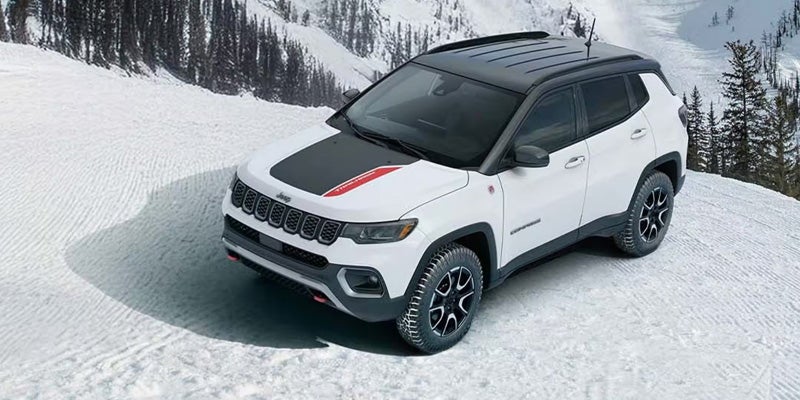
2026 Jeep Compass in the snow

Is the 2026 Jeep Compass a Good Car for Wyoming?

Direct Verdict: Is the 2026 Jeep Compass Suited for Wyoming? Yes. The 2026 Jeep Compass offers winter capability, turbocharged power for mountain elevations, and fuel efficiency for Wyoming commutes. Equipped with standard four-wheel drive across every trim, a standard 2.0-liter turbocharged engine generating 200 horsepower, and Selec-Terrain traction modes, this compact crossover maneuvers through winter snowstorms in Sweetwater County without demanding the higher fuel consumption of full-size sport utility vehicles. From navigating snow-packed residential grades on White Mountain to cruising open stretches of Interstate 80 between Rock Springs and Green River, the 2026 Compass pairs confident mechanical traction with driver-focused cabin features designed for sub-zero weather. Drivetrain Traction Standard 4x4 Jeep Active Drive with Selec-Terrain Engine Output 200 HP / 221 LB-FT 2.0L Direct-Injection Turbocharged 4-Cylinder Highway Fuel Economy Up to 31 HWY EPA-estimated 31 hwy / 23 city / 26 combined Maximum Towing Up to 2,000 LBS When properly equipped with factory tow package Turbocharged Performance at 6,000+ Feet Elevation Atmospheric density drops sharply across southwestern Wyoming. Rock Springs sits at an elevation of 6,271 feet above sea level, and nearby highway summits such as South Pass climb to 7,412 feet. Naturally aspirated engines lose roughly three percent of their total power output for every 1,000 feet gained in altitude, leading to a noticeable nineteen to twenty-two percent loss of horsepower and torque on mountain inclines. The 2026 Jeep Compass addresses this high-altitude power drop with its standard 2.0-liter turbocharged inline-four engine. By forcing pressurized intake air directly into the combustion cylinders, the turbocharger compensates for thin Wyoming air, maintaining 200 horsepower and 221 pound-feet of torque from 1,750 revolutions per minute up through 4,250 revolutions per minute. Paired with a smooth-shifting eight-speed automatic transmission, the Compass accelerates crisply when merging onto high-speed Interstate 80 traffic lanes or climbing long, windy grades toward Rawlins. Standard Four-Wheel Drive & Selec-Terrain Traction Control Unlike many compact crossovers that charge thousands of dollars extra for all-wheel drive, every 2026 Jeep Compass comes equipped with Jeep Active Drive four-wheel drive as standard equipment. This mechanical system features a fully disconnecting rear axle that operates in front-wheel drive during dry summer cruising on paved highways, reducing mechanical drag. When front-wheel slip is sensed, the driveline engages four-wheel drive within milliseconds without requiring driver intervention. Drivers can tailor the vehicle response using the console-mounted Selec-Terrain dial, which coordinates twelve individual vehicle subsystems including throttle input, transmission shift scheduling, stability control, and torque transfer: Auto Mode: Continuously monitors traction, road pitch, and steering angle. Ideal for mixed autumn conditions or changing pavement surfaces along Dewar Drive. Snow Mode: Adjusts transmission shift schedules to begin in second gear when necessary, limits engine torque overshoot, and splits drive power evenly across axles to minimize wheel slip on hard-packed ice and fresh snowfall. Sand and Mud Mode: Calibrates stability programming to allow controlled wheel spin, helping tires paddle through unpaved gravel, desert clay, or sticky mud during spring thaw. Trailhawk Edition: Built for Severe Wyoming Backroads For drivers who frequently travel rural gravel corridors, two-track BLM public land roads, or access routes to the Flaming Gorge National Recreation Area, the 2026 Jeep Compass Trailhawk provides specialized equipment designed for rugged terrain. The Trailhawk features a factory Trail Rated badge earned through testing in traction, water fording, maneuverability, articulation, and ground clearance. Jeep Active Drive Low Features a 20:1 crawl ratio that multiplies wheel torque at low speeds, enabling controlled crawling over rocky terrain, steep ravines, and rutted mountain roads without riding the brakes. 8.6 Inches of Ground Clearance A one-inch factory suspension lift increases clearance to 8.6 inches, protecting the underbody when straddling frozen snow ruts or driving through unplowed neighborhood streets after heavy winter drifts. High-Strength Steel Skid Plates Factory-installed protective steel armor shields vital components underneath the chassis, including the engine oil pan, automatic transmission, transfer case, and fuel tank against hidden rock strikes. Selec-Terrain Rock Mode Exclusive to the Trailhawk model, Rock mode locks the 4x4 system in low range and applies specialized brake-lock differential algorithms to maintain forward momentum over uneven rocks. Sub-Zero Winter Equipment & New Features for 2026 Winter in Sweetwater County routinely brings sub-zero morning temperatures, wind chills below minus twenty degrees, and frozen precipitation. For the 2026 model year, Jeep updated the Compass Trailhawk with standard comfort and convenience amenities based on customer feedback: Standard Remote Vehicle Start: Allows drivers to start the engine from indoors, circulating warm motor oil and activating interior heaters before stepping outside into freezing winter weather. Windshield Wiper De-Icer: Heating elements embedded in the lower glass free iced wiper blades quickly without manual scraping, helping maintain a clear view during heavy snowfall. Heated Steering Wheel & Heated Front Seats: Delivers rapid warming to cold hands and seats while the cabin climate control system reaches operating temperature. Eight-Way Power Driver Seat: Includes power lumbar support, making long highway drives across Wyoming comfortable and supportive. Interstate 80 Highway Stability & Crosswind Handling One of the primary challenges of driving in southern Wyoming is handling violent crosswinds along Interstate 80 between Rock Springs, Rawlins, and Evanston, where gusts frequently exceed fifty miles per hour. Tall, boxy utility vehicles with upright vertical profiles can wander noticeably in these conditions. The 2026 Jeep Compass benefits from a low center of gravity, a unibody construction, and standard electronic stability control with electronic roll mitigation. These active systems monitor lateral yaw rates and apply selective wheel braking if wind buffeting disrupts lane alignment. However, drivers should keep physics in mind: with a curb weight between 3,620 and 3,840 pounds and a compact 103.8-inch wheelbase, the Compass handles crosswinds with significantly more composure than a Wrangler, yet will feel side gusts more noticeably than a heavier midsize sport utility vehicle like the Grand Cherokee. Maintaining two hands on the wheel through wind-prone cuts near Elk Mountain and Point of Rocks remains essential. Cargo Space, Fuel Range & Everyday Practicality Wyoming outdoor recreation demands cargo flexibility. The 2026 Compass offers 27.2 cubic feet of cargo volume behind the second-row seats, accommodating groceries, toolboxes, or winter emergency supplies. Folding down the 60/40 split-folding rear seat expands total cargo capacity to 59.8 cubic feet, providing space for hunting gear, ice fishing augers, ski bags, or camping luggage. For the 2026 model year, official EPA fuel economy ratings across all Compass 4x4 trims are 31 miles per gallon highway, 23 miles per gallon city, and 26 miles per gallon combined. Paired with a 13.5-gallon fuel tank, the vehicle delivers a theoretical highway cruising range of roughly 418 miles under ideal conditions. In real-world Wyoming driving, sustained 80 mph interstate cruising against headwinds or cold winter travel with cabin defrost operating will reduce highway fuel economy, resulting in an effective real-world range closer to 300 to 340 miles. When traveling isolated stretches along US Route 191 or Wyoming State Highway 372 where services are sparse, planning fuel stops ahead of time is a smart practice. Towing Capability & Equipment Details When properly equipped, the 2026 Jeep Compass provides a maximum towing capacity of up to 2,000 pounds. This rating accommodates practical utility towing needs throughout southwestern Wyoming, including: Recreational Trailers: Haul a lightweight utility trailer carrying a snowmobile, dirt bike, or all-terrain vehicle to local riding trails. Watercraft: Tow personal watercraft, canoes, or small aluminum boats to Flaming Gorge Reservoir or the Green River. Utility Hauling: Pull small enclosed utility trailers for home supplies, firewood, or landscape materials. Shoppers evaluating towing gear should note the factory equipment details: the factory Trailer Tow Group—which includes a Class III receiver hitch and a 4-pin wiring harness—is orderable directly from the factory on the Trailhawk trim. For Latitude and Limited models, the same 2,000-pound towing rating can be achieved through a dealer-installed genuine Mopar receiver hitch and wiring harness installed by our certified technicians. Comparing the Compass to Other Jeep Models While the 2026 Compass provides an ideal balance of winter capability and fuel economy for many Wyoming drivers, your individual driving routine may align with different vehicles in the Jeep showroom: Choose the Jeep Compass If: You want agile city maneuverability, lower fuel expenses, standard four-wheel drive, and capable snow performance for daily commuting along Interstate 80 and around town. Choose the Jeep Grand Cherokee If: You need larger two-row or three-row passenger seating, up to 6,200 pounds of maximum towing capacity for travel trailers, or premium interior appointments. Choose the Jeep Wrangler If: Your primary goal is serious rock crawling, removable roof and doors for open-air trail exploration, and solid front and rear axles for extreme terrain modifications. Explore 2026 Jeep Compass Inventory in Rock Springs Fremont Motor Rock Springs is your local source for new Jeep four-wheel drive sport utility vehicles. Browse our selection online or visit our showroom on Foothill Boulevard to test drive the 2026 Compass on local roads. View New Compass Inventory Call (307) 228-2091 Schedule Service Fremont Care & Certified Mopar Maintenance in Rock Springs Keeping a four-wheel drive vehicle operating reliably through Wyoming winter conditions requires routine maintenance. Because new Jeep models do not include an active manufacturer maintenance program, new 2026 Jeep Compass purchases are eligible for Fremont Care. Fremont Care comes with eligible vehicle purchases, providing two oil changes and two tire rotations within the initial twelve months of ownership on qualifying purchases. Our factory-trained Mopar technicians perform factory multi-point inspections, monitor driveline fluids, install engine block heaters, and carry genuine Mopar winter accessories such as all-weather floor mats and splash guards. Visit Fremont Motor Rock Springs at 1900 Foothill Blvd, Rock Springs, WY 82901, or speak with our sales and service specialists at (307) 228-2091 to learn more about the 2026 Jeep Compass lineup. Disclosures & Disclaimers: Towing capacity up to 2,000 lbs when properly equipped; factory Trailer Tow Group is available on Trailhawk, and dealer-installed genuine Mopar towing accessories are required on other trims to achieve rating. Additional equipment, cargo, and passenger weight reduce maximum trailer weight. EPA-estimated fuel economy ratings reaching up to twenty-three miles per gallon city, thirty-one miles per gallon highway, and twenty-six miles per gallon combined apply to 2026 Jeep Compass 4x4 models; actual mileage will vary based on driving speed, weather, terrain, and vehicle load. Fremont Care comes with eligible vehicle purchases, providing 2 oil changes and 2 tire rotations within the initial 12 months of ownership on qualifying purchases; see dealer for complete terms and vehicle eligibility details. Roadside assistance is not included with Fremont Care.

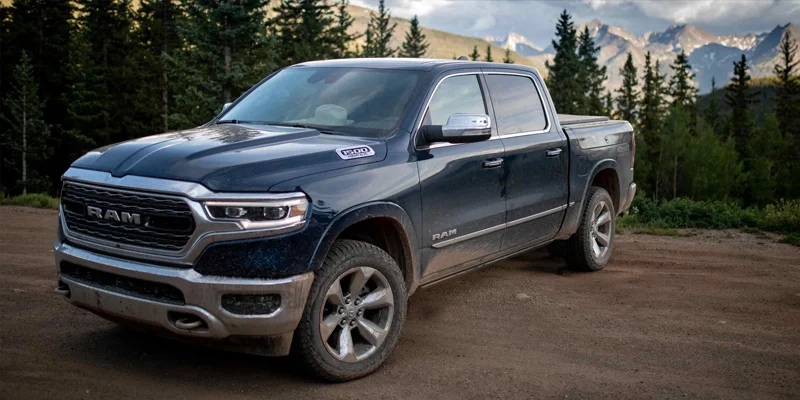
2022 Ram 1500 Used Pickup Truck - Fremont Motor Rock Springs

6 Tips for Shopping for a Used Truck in Rock Springs WY

Rock Springs Used Truck Buyer Quick Summary Undercarriage & Frame Check Inspect boxed frame rails, cab corners, and brake lines for scale or chemical buildup from trona mine commutes and winter highway brine. 4x4 & Axle Gearing Test both 4HI and 4LO transfer-case engagement and verify factory axle ratios and trailer brake controllers before towing up high-elevation grades. Fremont Inspection Standards Qualifying Fremont Certified Pre-Owned trucks pass a 70-point mechanical and safety inspection and include a 3-month/3,000-mile limited warranty. Shopping for a used pickup in Sweetwater County calls for a tougher inspection checklist than buying in a mild coastal or metro market. Sitting above 6,200 feet in elevation, trucks around Rock Springs work through Interstate 80 ground blizzards, alkaline desert dust, washboard county lease roads, and steep climbs toward Flaming Gorge Reservoir and South Pass. Before signing paperwork on a pre-owned half-ton, three-quarter-ton, or one-ton pickup, use these six practical inspection tips to verify the truck is built and maintained for southwestern Wyoming roads. Tip 1: Inspect the Frame Rails, Cab Corners, and Undercarriage Pickups that commute to the trona facilities west of Green River or log winter miles along I-80 face heavy chemical and abrasive exposure. Sodium carbonate dust, liquid de-icer, and winter road salt pack inside boxed frame rails and body mounts—especially on auction trucks brought in from northern or Upper Midwest states. Boxed Frame Crossmembers & Weld Seams: Light surface oxidation is normal on a Wyoming pickup, but flaking rust scale, bubbling metal, or soft spots near the rear leaf-spring shackles and spare-tire winch point to structural corrosion. Rocker Panels, Cab Corners, and Bed Wheel Arches: Run your hand along the inner lip of the rear wheel wells and the pinch welds beneath the cab doors to check for body filler, mismatched paint texture, or rust blisters. Steel Brake Lines & Fuel Tank Straps: Look closely at the hydraulic brake lines routed along the driver-side frame rail and the metal straps supporting the fuel tank, where slush and gravel accumulate. Skid Plates & Crossmember Gouges: Deep dents on the transfer-case skid plate, bent lower control-arm mounts, or crushed exhaust tubing indicate the truck was high-centered on rocky two-track trails. Tip 2: Test 4x4 Transfer Case and Locking Differential Engagement Four-wheel drive is a winter necessity across Sweetwater County rather than an occasional convenience. Skipping transfer-case fluid intervals or driving in four-wheel drive on dry asphalt binds up internal chains, shift forks, and electronic actuators. 4HI and 4LO Actuation: Shift into 4HI and 4LO (with the transmission in neutral while stopped for low range) to verify the dash indicator locks in solidly without flashing warning lights or metallic clunking. Front Axle Seals & CV Boots: On independent front suspension half-ton trucks, check the inner and outer rubber CV boots for grease tears; on solid-axle heavy-duty pickups like the Ram 2500 and Ram 3500, inspect the front axle U-joints and axle-tube seals for gear-oil seepage. Electronic Rear Axle Locker: If the pickup includes an off-road package with a locking rear differential, test engagement at low speed on a gravel surface to confirm the actuator locks and releases cleanly. Tip 3: Verify Factory Towing Hardware and Axle Ratios A receiver hitch bolted beneath the rear bumper does not automatically mean a truck has the cooling capacity or differential gearing to pull a camper up Wilkins Peak or launch a fiberglass boat at Buckboard Crossing. High altitude thins the air, reducing naturally aspirated engine output and making radiator and transmission heat rejection work harder. Door-Jamb Payload & GVWR Label: Check the Tire and Loading Information placard inside the driver-side door jamb for the exact payload rating of that specific VIN. Crew cabs with heavy accessories and diesel engines carry less bed payload than lighter configurations. Axle Ratio & Integrated Trailer Brake Controller: Look for a factory dash-mounted trailer brake controller and confirm the rear differential gear ratio (such as a 3.73, 3.92, or 4.10 axle ratio versus a highway-oriented 3.21) matches your trailer weight when properly equipped. Auxiliary Transmission & Oil Coolers: Inspect the front cooling stack for straight radiator fins free of mud or bug buildup, and check transmission cooler lines for dry, leak-free fittings. Fifth-Wheel & Gooseneck Prep: Look inside the bed for factory fifth-wheel puck mounts; if an aftermarket gooseneck hitch is installed, check underneath the bed to confirm it bolts directly to the frame rails. Tip 4: Evaluate Cold-Start Behavior on Gas and Diesel Engines Sub-zero mornings in Rock Springs expose weak batteries, worn pre-heaters, and tired fuel injectors right away. Whenever possible, evaluate the engine from a cold start before it has been warmed up on the lot. Exhaust Manifold Bolts (V8 Gas Engines): Listen near the front wheel wells during the first 60 seconds after a cold start for a sharp metallic ticking sound that quiets down as the metal expands—a common indicator of warped exhaust manifolds or broken manifold studs. Diesel Cold-Start & Emissions Equipment: On heavy-duty diesel pickups, check the front bumper for an intact block-heater cord, verify the intake grid heater cycles quickly prior to cranking, and confirm all factory emissions components (DPF, SCR, and DEF systems) remain intact and unmodified. Crankcase Pressure & Transmission Shifts: Test upshifts and downshifts under load on the Foothill Boulevard grade or the I-80 on-ramp to verify crisp gear changes free of torque-converter shudder or flared RPMs. Tip 5: Check Front-End Suspension, Steering Linkage, and Tires Washboard county gravel roads, cattle guards, and frost-heaved pavement take a toll on truck front ends. Heavy-duty 4x4 trucks with solid front axles can develop steering wheel oscillation at highway speeds if worn linkage bushings go unaddressed. Track Bar, Drag Link, and Tie-Rod Ends: Have a helper rock the steering wheel slightly while you watch the front steering linkage; vertical or side-to-side play in the track-bar mount or ball joints points to worn components that need replacement. Shocks, Struts, and Leaf Springs: Check all four shock bodies for leaking hydraulic oil and inspect the rear coil or leaf springs for sagging ride height caused by past overloading. Load Range E & 3PMSF Tires: Confirm all four tires match in brand, size, and tread depth so the transfer case is not strained by mismatched rolling diameters. On three-quarter-ton and one-ton pickups, verify the tires carry a 10-ply Load Range E sidewall rating. Tip 6: Review Idle Hours, Service Records, and Dealership Inspection Coverage Total odometer mileage only tells half the story on a Wyoming work truck. A pickup that idled for thousands of hours on a winter job site carries far more internal engine wear than its odometer reading suggests. Engine Idle Hours vs. Driving Hours: Scroll through the digital instrument cluster menu to compare idle hours against driving hours. Each hour of extended idling equals roughly 30 to 33 miles of engine wear on valvetrain components and diesel particulate filters. CARFAX® Maintenance History: Check for documented differential, transfer-case, coolant, and transmission fluid changes alongside regular oil service and clean title verification. Inspection Area What to Look For in Rock Springs Why It Matters in Sweetwater County Frame & Underbody Boxed frame scale, brake lines, cab corners, skid plates Protects against winter road treatment and alkaline trona dust 4x4 Drivetrain Clean 4HI/4LO engagement, intact CV boots & axle seals Essential traction for snow-packed I-80 corridors and lease roads Towing & Cooling Door-jamb payload label, axle ratio, factory brake controller Maintains safe pulling power at 6,200+ ft and Flaming Gorge grades Powertrain Health Cold-start manifold quietness, block heater cord, intact emissions Prevents sub-zero no-starts and costly exhaust or injector repairs Steering & Tires Tight track bar/tie rods, dry shocks, matched Load Range E tires Eliminates highway steering oscillation after gravel road use History & Idle Ratio Cluster idle hours vs. driving hours, CARFAX® fluid records Spots job-site fleet trucks with high stationary engine hours Why Shop Used Trucks at Fremont Motor Rock Springs? Buying a used pickup from a private curb seller leaves every mechanical question mark on your shoulders once the title changes hands. At Fremont Motor Rock Springs Chrysler Dodge Jeep Ram Fiat, our factory-trained technicians put incoming trucks on the lift before they reach our lot: Fremont Certified Pre-Owned Qualifying pre-owned trucks undergo a 70-point mechanical and safety inspection by factory-certified technicians, include a clean CARFAX® vehicle history verification, and carry a 3-month/3,000-mile limited warranty. Fremont Care Protection Fremont Care comes with eligible vehicle purchases and provides 2 oil changes and 2 tire rotations within the initial 12 months of ownership to keep your pickup maintained through all four Wyoming seasons. Bargain Corral Selection Looking for an affordable work pickup, ranch truck, or hunting rig? Browse our local trade-in selection in the Bargain Corral. Stop by Fremont Motor Rock Springs at 1900 Foothill Blvd, Rock Springs, WY 82901, or call our team at (307) 228-2091 to inspect our used trucks in person and take a test drive today. Browse Used Trucks in Rock Springs Value Your Trade-In Schedule Service Frequently Asked Questions What is included with a Fremont Certified Pre-Owned truck in Rock Springs? Every qualifying Fremont Certified Pre-Owned vehicle undergoes a 70-point mechanical and safety inspection performed by factory-certified technicians, includes a clean CARFAX® vehicle history verification, and comes backed by a 3-month/3,000-mile limited warranty. Does Fremont Care come with used truck purchases? Yes, Fremont Care comes with eligible vehicle purchases at Fremont Motor Rock Springs and provides 2 oil changes and 2 tire rotations during the first 12 months of ownership. How do I check how many hours a used truck has idled? Use the steering wheel buttons to scroll through the digital driver information display to the Engine Hours screen, which separates total idle hours from total driving hours. Each hour of idling equals approximately 30 to 33 miles of engine wear. *Disclaimer: Fremont Care comes with eligible vehicle purchases and provides 2 oil changes and 2 tire rotations within the initial 12 months of ownership on qualifying/eligible vehicle purchases. Fremont Certified Pre-Owned 3-month/3,000-mile limited warranty applies to qualifying pre-owned vehicles; see dealer for complete warranty coverage and eligibility details. Always consult your vehicle's owner's manual and door-jamb certification labels for exact towing and payload ratings when properly equipped.

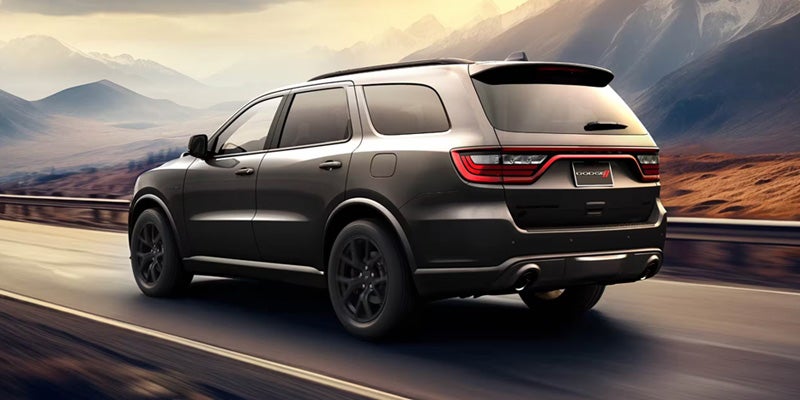
Dodge Durango

Is the 2026 Chrysler Pacifica Better Than the Dodge Durango?

The 2026 Chrysler Pacifica AWD is better for maximum interior passenger space, flexible cargo folding, and everyday family ride comfort, while the Dodge Durango is better if your household requires heavy towing capacity up to 8,700 lbs or performance V8 engine options. Neither vehicle is universally superior because each serves a distinct family role: the Chrysler Pacifica functions as an ultra-versatile passenger mover with about 141 cubic feet of maximum cargo capacity, whereas the Dodge Durango operates as a truck-based muscular SUV engineered for hauling heavy trailers and navigating rugged terrain. Choosing between these two models comes down to what daily utility means for your household. The 2026 Chrysler Pacifica AWD is powered by a 3.6L Pentastar V6 engine producing 287 hp and 262 lb-ft of torque mated to a 9-speed automatic transmission. For families navigating the semi-arid high desert basin around Rock Springs, where sudden winter storms and icy road conditions occur frequently, the available all-wheel drive system on the Select, Limited, and Pinnacle trims engages automatically when front-wheel slip is detected, low ambient temperatures are measured, or wipers are activated, without requiring driver intervention. 2026 Dodge Durango interior. On the other hand, the Dodge Durango provides three rows of seating for up to seven passengers with available all-wheel drive, higher ground clearance, and an available V8 powertrain designed for heavier tasks. While both vehicles deliver complete family functionality, the minivan prioritizes low step-in height, power sliding side doors, and passenger legroom across all three rows. If you want to compare both family haulers side by side in person, you can easily find our showroom on Foothill Blvd or give our team (307) 228-2091 for immediate assistance. What Are the Practical Seating and Cargo Differences Between Pacifica AWD and Durango? With up to eight-passenger seating and approximately 141 cubic feet of cargo space, the 2026 Chrysler Pacifica AWD surpasses the Dodge Durango's seven seats and 85 cubic feet of cargo volume. Behind the third row alone, the Chrysler Pacifica retains about 32 cubic feet of deep luggage storage, whereas the Dodge Durango provides roughly 17 cubic feet. 2026 Chrysler Pacifica. Cabin space directly dictates passenger comfort on longer road trips. The 2026 Chrysler Pacifica AWD boasts 165 cubic feet of total passenger volume, giving third-row occupants 36.5 inches of legroom. In contrast, the Dodge Durango offers 141 cubic feet of passenger volume with third-row legroom measuring 30.3 inches. That six-inch gap in the rearmost bench allows teenagers and adults to ride comfortably in the van without feeling cramped, whereas the third row in the SUV is best suited for younger children. 2026 Chrysler Pacifica interior. Cargo loading flexibility represents another massive structural contrast between these two vehicles: Chrysler Pacifica Stow 'n Go Seating: On gas-powered Select and Limited trims, second- and third-row seats fold completely flat into dedicated floor tubs in seconds, eliminating the need to physically remove heavy seats from the cabin. (Note: The luxury Pinnacle trim replaces second-row Stow 'n Go with non-stowing, ultra-plush captain's chairs). Dodge Durango Split-Folding Seats: Second-row captain's chairs or bench seating fold forward, while the 50/50 split third row folds flat onto the cargo floor, creating a flat deck but elevated floor height. Power Sliding Doors vs. Swinging SUV Doors: The Chrysler Pacifica features hands-free power sliding side doors that allow children to enter and exit in tight parking lots without bumping adjacent cars, while the Dodge Durango uses traditional wide-swinging rear doors. When families visit our lot to compare a minivan with a three-row crossover, they usually test the second-row seat fold mechanism and third-row legroom before even looking under the hood. If your daily routine involves hauling sports equipment, camping gear, or groceries alongside a full family, exploring our inventory of pre-owned family vehicles can help you see how these different seating layouts hold up over time. Engine & Performance Powertrain specs by trim Feature Limited Limited AWD Pinnacle Pinnacle AWD Select Select AWD Engine 3.6L 3.6L 3.6L 3.6L 3.6L 3.6L Horsepower 287 hp 287 hp 287 hp 287 hp 287 hp 287 hp Torque 262 lb-ft 262 lb-ft 262 lb-ft 262 lb-ft 262 lb-ft 262 lb-ft Transmission automatic 9-speed automatic 9-speed automatic 9-speed automatic 9-speed automatic 9-speed automatic 9-speed Drivetrain Front-wheel drive All-wheel drive Front-wheel drive All-wheel drive Front-wheel drive All-wheel drive Dimensions & Capacity Capacity and dimensions by trim Feature Limited Limited AWD Pinnacle Pinnacle AWD Select Select AWD Seating 7 7 7 7 7 7 Cargo 32.3 cu ft 32.3 cu ft 32.3 cu ft 32.3 cu ft 32.3 cu ft 32.3 cu ft Curb weight 4,330 lbs 4,883 lbs 4,883 lbs 4,883 lbs 4,330 lbs 4,883 lbs Towing 3,600 lbs 3,600 lbs 3,600 lbs 3,600 lbs 3,600 lbs 3,600 lbs Payload 1,725 lbs 1,417 lbs 1,417 lbs 1,417 lbs 1,725 lbs 1,417 lbs How Much Can the Dodge Durango Tow Compared to the Chrysler Pacifica AWD? The Dodge Durango dramatically outperforms the Chrysler Pacifica AWD in maximum towing capability, pulling up to 8,700 lbs on properly equipped V8 models compared to the minivan's maximum rating of 3,600 lbs. For households that pull heavy double-axle camper trailers, horse trailers, or large cabin cruisers, the Dodge Durango is the clear choice. The 2026 Chrysler Pacifica AWD achieves its 3,600 lbs towing limit when equipped with the factory Trailer Tow Group, which adds a Class II hitch receiver, four-pin and seven-pin wiring harness, and heavy-duty engine cooling. That capacity is sufficient for pulling a pair of personal watercraft, a lightweight single-axle utility trailer, or a small pop-up tent camper. By comparison, the Dodge Durango offers multiple towing thresholds based on engine configuration: 3.6L Pentastar V6: Tows up to 6,200 lbs when properly equipped. 5.7L HEMI V8: Tows up to 7,400 lbs with integrated trailer brake control. 6.4L HEMI V8 / Supercharged 6.2L V8: Reaches the peak towing capacity of 8,700 lbs. For mountain driving around Pinedale, where high elevation demands steady engine cooling and robust transmission hardware, towing heavy loads requires consistent mechanical maintenance. Keeping your powertrain components, differential fluids, and trailer wiring in peak condition is essential for safe hauling, and you can easily schedule a maintenance check with our factory-trained technicians to keep your vehicle travel-ready. What Is the Driving Range on a Single Tank of Gas for Both Vehicles? The Dodge Durango offers a longer total highway driving range on a single tank of fuel due to its larger 24.6-gallon fuel tank, achieving over 600 miles of highway range with its V6 engine compared to roughly 475 miles for the Chrysler Pacifica AWD. The 2026 Chrysler Pacifica AWD uses a 19-gallon fuel tank and achieves an EPA-estimated 20 mpg combined, delivering up to 19 mpg city and 28 mpg highway on front-wheel-drive configurations. Highway cruising range and fuel economy breakdown for both haulers: 2026 Chrysler Pacifica FWD: 19-gallon tank, rated at 19 mpg city / 28 mpg highway, yielding roughly 532 highway miles per tank. 2026 Chrysler Pacifica AWD: 19-gallon tank, rated at 17 mpg city / 25 mpg highway / 20 mpg combined, yielding roughly 475 highway miles per tank. Dodge Durango 3.6L V6 AWD: 24.6-gallon tank, rated at 18 mpg city / 25 mpg highway, yielding up to 615 highway miles per tank. Dodge Durango 5.7L V8 AWD: 24.6-gallon tank, rated at 14 mpg city / 22 mpg highway, yielding roughly 540 highway miles per tank. While the Chrysler Pacifica front-wheel-drive model achieves superior highway efficiency at 28 mpg highway, the Dodge Durango compensates for its lower fuel economy figures with a massive 24.6-gallon fuel reservoir. This extra tank volume allows SUV drivers to travel farther between fill-ups on long remote stretches of highway. To explore fuel-efficient options across our current lineup of new models, our sales team is standing by to help you compare real-world operating costs. You can also get a head start on your purchase planning by evaluating your trade-in online today. Fuel Economy Fuel economy and range by trim Feature Limited Limited AWD Pinnacle Pinnacle AWD Select Select AWD MPG 19 city / 28 hwy / 22 combined 17 city / 25 hwy / 20 combined 19 city / 28 hwy / 22 combined 17 city / 25 hwy / 20 combined 19 city / 28 hwy / 22 combined 17 city / 25 hwy / 20 combined What Common Mechanical Complaints Should Buyers Know About the Pacifica? Common mechanical and electrical issues reported on earlier Chrysler Pacifica model years include sliding door latch or sensor misalignments, secondary auxiliary battery drain affecting the engine stop-start system, and occasional software lag on earlier infotainment displays. Knowing these specific areas allows buyers to perform targeted inspections when evaluating new or pre-owned minivans. Essential inspection areas for Chrysler Pacifica buyers include: Power Sliding Door Hardware: Test automatic opening and closing operations from the key fob, pillar switches, and exterior handles to ensure sensors detect obstructions correctly and tracks move smoothly without binding. Dual 12-Volt Battery System: Models equipped with automatic engine stop-start utilize a primary starter battery and an auxiliary battery. Weak auxiliary batteries can cause false dashboard error warnings or disable stop-start functions. Transmission Shift Smoothness: The 9-speed automatic transmission should transition smoothly through low-speed gear changes without harsh engagement or hesitation during cold acceleration. Uconnect 5 Infotainment System: Verify that touchscreen responses, Bluetooth pairing, backup camera displays, and wireless Apple CarPlay or Android Auto connections load promptly. Staying proactive on routine maintenance prevents minor electrical glitches from developing into inconvenient service stops. When you are ready to move forward with purchasing a family hauler, filling out our secure online credit application streamlines the entire buying process before you visit our dealership. Common Family Hauler Questions Answered Q: Does the 2026 Chrysler Pacifica AWD retain second-row Stow 'n Go seating? Yes, for gas-powered Select and Limited trims, the 2026 Chrysler Pacifica AWD retains second-row Stow 'n Go seating functionality. Chrysler engineered the all-wheel-drive system with a power-transfer unit and rear drive module that disengages completely when extra traction is not needed, preserving the deep underfloor storage tubs. However, the range-topping Pinnacle trim equips plush, fixed second-row captain's chairs that do not fold into the floor. Q: What engine comes standard in the 2026 Chrysler Pacifica gas lineup? The 2026 Chrysler Pacifica comes standard with a 3.6L Pentastar V6 engine across all gas trims, including Select, Limited, and Pinnacle. This naturally aspirated engine generates 287 hp and 262 lb-ft of torque and is paired exclusively with a 9-speed automatic transmission in either front-wheel drive or available all-wheel drive. Q: Which vehicle is easier for loading young children in car seats? The Chrysler Pacifica is significantly easier for child car seat installation and loading due to its lower ride height and wide power sliding doors. Parents do not need to lift children upward into a tall cabin, and the sliding doors allow easy access even when parked closely alongside other vehicles in busy parking lots. Q: Is all-wheel drive standard on the Dodge Durango? All-wheel drive is widely available across the Dodge Durango trim lineup, though rear-wheel drive serves as the standard entry configuration on select trims. Choosing all-wheel drive enhances low-traction launch capability and towing stability in snow, rain, or unpaved driving conditions. Q: How does ground clearance compare between the Pacifica AWD and Durango? The Dodge Durango offers substantially higher ground clearance, averaging roughly 8 inches depending on tire and suspension trim, compared to approximately 5.4 inches for the Chrysler Pacifica AWD. This additional clearance allows the Dodge Durango to navigate unpaved trail roads, steep driveway transitions, and deep snow drifts with reduced risk of scraping the underbody. When Should You Plan to Order a Future Pacifica or Durango? You should start discussing upcoming model year orders for a Chrysler Pacifica or Dodge Durango roughly three to six months prior to the official order bank opening for that production year. While current 2026 model year inventory is readily available on dealership lots today, customers seeking custom factory order configurations, specialized paint choices, or specific option packages for future model releases benefit from establishing early contact with our sales specialists. Whether you prefer the unmatched passenger flexibility of the Chrysler Pacifica AWD or the heavy-duty muscle of the Dodge Durango, our team is ready to guide you through side-by-side test drives and flexible financing plans tailored to your household budget. Visit our Rock Springs location at 1900 Foothill Blvd, Rock Springs, WY 82901, or call us directly at (307) 228-2091 to schedule your visit today. © 2026 Fremont Motor Rock Springs Chrysler Dodge Jeep Ram Fiat. All rights reserved. Vehicle specification data © JATO Dynamics Limited.