




Tire Rotation Rock Springs WY
Maintaining traction on the varied surfaces of Southwest Wyoming requires more than just a sturdy set of tires; it demands a consistent maintenance strategy.
The gravel back roads around Mckinnon often accelerate shoulder wear on tires due to the constant friction of loose stone and uneven grades. When tires remain in the same position for too long, the leading edges of the tread blocks take the brunt of the force, leading to "cupping" or "feathering" that can cause cabin noise and reduced grip. Rotating your tires redistributes these loads, ensuring that no single tire wears out prematurely while the others remain viable.

Tire Wear Patterns
Our team focuses on the specific wear patterns created by the high-torque demands of modern RAM trucks and Jeep 4WD systems. In a typical front-wheel-drive or heavy-duty 4x4 setup, the front tires handle the majority of steering and braking forces, which often causes the outer edges to wear faster than the rears. By moving these tires to the rear axle according to a specific cross or longitudinal pattern, we extend the usable life of the entire set. This practice is a practical way to protect your investment and maintain the stability needed for hauling trailers or navigating steep mountain passes.
Inspections
Regular inspections during a rotation also allow our technicians to spot early signs of suspension wear or brake fatigue that might otherwise go unnoticed. If you have noticed a change in how your vehicle handles or if it has been several months since your last check, let us know, and we can discuss your vehicle's specific needs. For those ready to stop by, our Foothill Blvd service center is equipped with the specialized lifts and high-capacity torque wrenches required for heavy-duty vehicle maintenance.
Determining the Right Rotation Schedule for Your Vehicle
Most manufacturers and industry experts recommend a tire rotation interval between 5,000 and 8,000 miles. For many drivers, the most efficient way to manage this is to request a rotation every time the vehicle comes in for a routine oil change. Sticking to a six-month or 7,500-mile schedule helps ensure that the tread depth remains relatively even across all four corners. If a vehicle is used primarily for heavy towing or high-speed highway commuting, the friction levels increase, which may necessitate moving the tires more frequently to prevent heat-related tread breakdown. The type of drivetrain your vehicle uses significantly influences how the tires should be moved.
On a rear-wheel-drive vehicle, the rear tires often wear in the center due to acceleration forces, while the front tires wear on the shoulders from steering. A standard rotation pattern for these vehicles involves moving the rear tires straight to the front and crossing the front tires to the opposite sides of the rear axle.
All-wheel-drive systems require even more diligence, as significant differences in tread depth between the front and rear axles can place unnecessary stress on the center differential or transfer case. Waiting too long to rotate can lead to a "point of no return" where the wear pattern becomes so deep that rotating the tires actually causes a vibration.
Once a tire has developed a significant heel-toe wear pattern, moving it to a different position might result in less rubber contacting the road until the tire "wears into" its new home. Consistent maintenance at the 6,000-mile mark avoids this awkward transition and keeps the vehicle’s handling characteristics predictable.
Understanding Tread Depth and Cold Weather Safety
Does tread depth impact braking distance on ice? The short answer is that it is the single most important factor in how quickly your vehicle can stop when the temperature drops. In the colder climate of Wyoming, where packed snow and black ice are common for several months of the year, a tire with about 4/32 of tread will take significantly longer to stop than a tire with a full 10/32 or 12/32 of depth.
As the tread wears down, the sipes (the tiny slits in the rubber designed to bite into ice) disappear, leaving a flat surface that slides easily over frozen moisture. Rotating tires helps maintain a uniform tread depth across the entire vehicle, which is vital for the performance of Anti-lock Braking Systems (ABS) and Electronic Stability Control. If the front tires are worn down to about 5/32 while the rears are still at about 9/32, the vehicle may experience an imbalance during emergency braking, causing the front end to wash out or the rear end to swing wide. Keeping the depth consistent ensures that the tires on both axles provide a similar level of longitudinal and lateral grip, which is essential for staying on the road during a Wyoming winter. We recommend checking tread depth with a dedicated gauge or the "penny test" at every rotation.
While the minimum legal limit for tires in Wyoming is 2/32, most safety experts suggest replacing tires used in winter conditions once they reach about 4/32 or 5/32. Maintaining a regular rotation schedule helps all four tires reach these wear markers at the same time, allowing you to replace the full set and maintain the balanced handling the manufacturer intended.
Signs Your Vehicle Needs an Alignment Instead of a Rotation
A tire rotation addresses the wear of the rubber itself, but an alignment corrects the angles at which the tires contact the road. If you are driving on a flat stretch of highway near Vernal and the vehicle consistently drifts toward the shoulder when you let go of the steering wheel, you are likely dealing with an alignment issue. This "pulling" is usually caused by the camber, caster, or toe settings being knocked out of specification by a pothole or a rough curb strike.
While a rotation can fix a slight vibration or road noise caused by uneven tread, it will not stop a vehicle from pulling to one side. In fact, rotating tires onto a vehicle with bad alignment can ruin a perfectly good pair of tires in just a few thousand miles. You should look for specific visual cues on the tire tread, such as "sawtooth" wear or one side of the tire being significantly more worn than the other.
These are classic symptoms that the wheels are not pointing straight or are tilted inward or outward, dragging the rubber across the pavement rather than letting it roll freely. An alignment is a precision service that uses laser sensors to measure the position of all four wheels relative to the vehicle's frame. We often recommend a four-wheel alignment check when you install a new set of tires or if you notice that your steering wheel is off-center while the vehicle is traveling straight. Combining a rotation with a periodic alignment check ensures that your vehicle tracks true and that your tires last as long as possible.
The Pros and Cons of Professional Shop Services vs. DIY Rotation
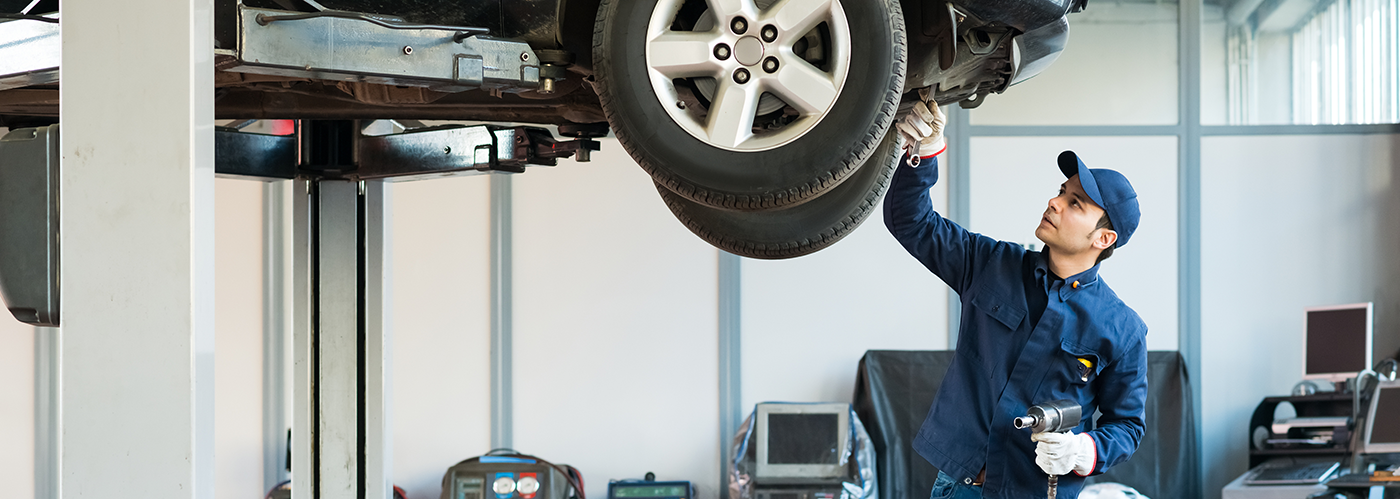
Taking on a tire rotation at home is a common goal for many hands-on owners, but it requires specific equipment to be done safely and accurately. To perform a proper rotation, you must be able to lift the entire vehicle or at least one side at a time, which requires a high-quality floor jack and a set of sturdy jack stands.
Using only the emergency scissor jack included with your vehicle can be dangerous for this type of work, as those jacks are designed only for quick roadside tire changes on level ground and are not intended for prolonged support. One of the primary benefits of professional service is the use of a calibrated torque wrench to tighten the lug nuts.
Over-tightening lug nuts with an impact wrench can warp brake rotors or stretch the wheel studs, while under-tightening can lead to a wheel coming loose while driving.
Our technicians follow the specific torque specifications for your vehicle, ensuring a secure fit without damaging the hardware. Additionally, a professional shop can perform a high-speed spin balance, which identifies heavy spots in the tire-and-wheel assembly that cause steering wheel shimmy at highway speeds.
Why Drivers Choose Fremont Chrysler Dodge Jeep RAM Rock Springs
Certified Service Technicians
Our factory-trained technicians understand the unique wear patterns caused by our local terrain and are ready to help you get the most out of your tires.
Modern Tire and Alignment Tools
Our facility utilizes advanced diagnostic technology to evaluate tire balancing and alignment precision during routine maintenance
Convenient Tire Service in Rock Springs
We’re proud to be the go-to hub for Sweetwater County motorists seeking expert tire rotations, balancing, and maintenance.
Tire Deals and Service Coupons
Keeping your vehicle safe and efficient shouldn’t break the bank. We regularly update our service menu with exclusive discounts on premium tire brands and essential maintenance. From seasonal rebates to bundle deals on rotations and alignments, explore our current offers to get the best performance out of your tires for less.
Schedule Tire Rotation in Rock Springs, WY
Visit Fremont Chrysler Dodge Jeep RAM Rock Springs for professional tire rotation services.
Schedule Service